Latest 1000w solar panel price in nigeria (2026 Price Guide)
The situation of electricity in Nigeria is making everyone think twice about their regular energy choices. Grid power is highly unpredictable, and buying fuel for your generator can quickly clean out your monthly budget. Because of this, switching to solar energy has become a wise choice for many families. If you are starting out small, finding the exact 1000w solar panel price in nigeria is the best place to begin your market research.
Investing in a solar system gives you a reliable shield against total blackouts. However, prices of solar equipment change frequently because of import duties and foreign exchange rates. This guide will reveal the real cost of getting a 1000W solar panel setup in the market today so you can plan your budget without any guesswork.
What is the 1000w solar panel price in nigeria and What Does It Include?
When you walk into an electronics store or search online, you need to understand what you are actually buying. In the solar market, a single 1000-watt solar panel does not exist as a single physical board. The maximum capacity for a single residential panel usually stops around 600 watts or 700 watts.
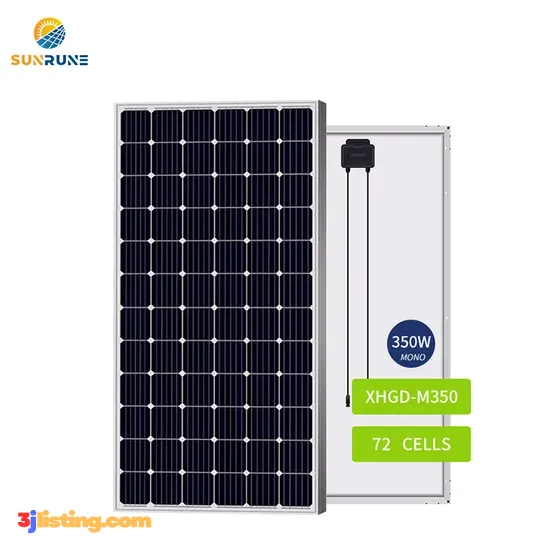
Therefore, when vendors talk about a 1000W solar panel setup, they are talking about a combination of multiple panels that add up to 1000 watts in total capacity. For example, a standard 1000W array usually consists of two 500W panels or three 350W panels connected together. This is also widely known as a 1 kilowatt (1kW) solar panel system.
Right now, if you are buying the solar panels alone to reach a total of 1000 watts, you should budget between ₦260,000 and ₦360,000. The final price depends heavily on the brand name and whether you are buying monocrystalline or polycrystalline panel types.
Why Does a 1000W Solar Setup Matter for Your Home?
Choosing this specific capacity has a lot of practical benefits, especially for everyday Nigerians who want to reduce their heavy reliance on fuel generators.
To begin with, it keeps your startup expenses low. Buying a massive 5kVA or 10kVA solar system requires millions of Naira which many families cannot afford at once. A 1000W array provides a pocket-friendly entry point into clean energy. You can start with this size and add more panels later as your financial situation improves.
Another major benefit is its ability to handle your daily essential electronics comfortably. If you are a remote worker, a freelance writer, or a business owner running a small shop, a 1000W system will keep your laptops, internet routers, office lights, and charging ports active throughout the afternoon.
Lastly, it frees you from the stress of generator maintenance. You do not need to buy engine oil regularly, change spark plugs, or listen to the loud noise of a generator while trying to rest at night. The panels sit silently on your roof and generate electricity as long as the sun shines.
Detailed Breakdown of 1000w solar panel price in nigeria
To give you a clear picture of what you will spend in the market, we have categorized the options. You can buy the panels separately if you already have an inverter, or you can purchase a complete package.
Here is an estimated price table for various 1000W solar configurations across top equipment dealers in Nigeria today:
| Solar Configuration Type | What is Included in the Cost | Estimated Price Range (Naira) |
|---|---|---|
| Solar Panels Only (1000W Array) | 2 units of 500W Mono Panels or 3 units of 350W Panels | ₦260,000 – ₦360,000 |
| Basic 1000W Complete System | 1000W Panels, 1kVA Inverter, 1 unit of 200Ah Tubular Battery, Cables | ₦650,000 – ₦950,000 |
| Premium 1000W Complete System | 1000W Panels, 1.5kVA Hybrid Inverter, 1 unit of 100Ah Lithium Battery, Setup | ₦1,100,000 – ₦1,450,000 |
| 1000W Portable Solar Generator | All-in-one power station box with portable folding solar panels | ₦500,000 – ₦750,000 |
Let us look at the details of the brands making these panels so you know exactly which labels to look for when you hit the market.
Premium Solar Panel Brands (Jinko, Canadian Solar, Longi)
These are the tier-one brands trusted globally and locally for high performance. A single 500W monocrystalline panel from Canadian Solar or Jinko costs around ₦140,000 to ₦180,000. To get a 1000W total array using these top-quality brands, you will spend roughly ₦320,000 for the two panels. They are highly durable and perform exceptionally well even when the sky is slightly cloudy.
Budget-Friendly Panel Brands
There are alternative brands manufactured by reputable factories that offer slightly lower prices. Brands like Felicity Solar or local market variants sell their 500W panels for around ₦120,000 to ₦135,000. Getting 1000W from these options will cost you close to ₦260,000. They work fine, but their energy conversion efficiency might be slightly lower during the extreme heat of the afternoon.
Features and Types of Panels in a 1000W Array
When you study solar equipment catalogs, you will encounter different technical names. Knowing what they mean will protect you from buying an outdated setup.
Monocrystalline Solar Panels
These panels are easily recognized by their dark black appearance. They are made from pure silicon crystals, which makes them highly efficient at converting sunlight into usable electricity. If your roof space is small, you should buy monocrystalline panels because they produce more power per square meter. They cost a bit more, but they are worth the extra money.
Polycrystalline Solar Panels
These panels have a distinctive blue color and a speckled design. They are made by melting multiple silicon crystals together, which lowers the manufacturing cost. They are cheaper than mono panels, but they require more physical space on your roof to give you the same 1000W of power. They are a great choice if you have a massive roof and a very tight budget.
How a 1000W Solar System Works and How to Choose One
Understanding how the components work together will help you manage your expectations and load capacity effectively.
The solar panels catch daylight and turn it into direct current (DC) electricity. This electricity flows down into a charge controller, which regulates the speed of the current so your battery does not get damaged. The battery stores the energy for later use. Finally, the inverter takes that stored power and converts it into regular alternating current (AC) so your household gadgets can run smoothly.
When choosing a system, you must know what a 1000W system can safely power in a real Nigerian home:
- 5 Energy-saving LED light bulbs: 75 watts total
- 2 Standing or ceiling fans: 130 watts total
- 1 LED Television: 70 watts total
- 2 Smartphones and 2 Laptops: 150 watts total
The total active load here is around 425 watts. Running this load means your 1000W system operates with plenty of breathing room, allowing the panels to charge your battery while simultaneously keeping your home powered during the day.
What Are the Common Mistakes to Avoid When Buying Solar Panels?
Many buyers throw away hard-earned money because they fall for common market traps. Pay close attention to these errors so your installation can stand the test of time.
The biggest mistake is buying extremely cheap panels with fake labels. Some dishonest vendors paste a "500W" sticker onto a panel that is physically built to produce only 250 watts. If a vendor offers you a brand new 500W panel for ₦70,000 when the standard market price is over ₦130,000, please walk away. It is almost certainly a counterfeit product.
Another error is trying to run high-amp appliances. A 1000W setup cannot power an electric boiling ring, a microwave oven, a deep freezer, or a standard air conditioner. Trying to force these heavy loads onto the system will immediately trip the inverter or cause permanent damage to your battery bank.
Lastly, people often ignore the accumulation of dust. During the harmattan season, a thick layer of dust covers the glass surface of the panels. This dust blocks daylight and can drop your panel efficiency by more than 30%. You must ensure your installer places the panels at a slight angle, and you should clean the glass periodically with water and a soft cloth.
Frequently Asked Questions About 1000W Solar Prices
Can a 1000W solar panel setup power a small refrigerator?
It depends on the type of refrigerator. A standard old-model fridge has a high starting current that a small 1000W system cannot handle. However, if you own a modern 12V DC solar refrigerator or an extremely small energy-efficient inverter fridge, a well-configured 1000W system with a good battery can run it comfortably.
How many batteries do I need for a 1000W panel array?
For a balanced system, most solar engineers recommend using either one 200Ah 12V deep-cycle battery or two 100Ah batteries connected together. This provides enough storage capacity to hold the power generated by your 1000W panels during the day so you can use it at night.
Is it better to buy a portable solar generator or separate panels?
If you live in a rented apartment and move frequently, a portable 1000W solar generator is ideal because it requires no complex roof installation. But if you own your home and want a permanent solution that you can expand easily in the future, buying separate panels, an inverter, and a standard battery is the better choice.
How long do these solar panels last after installation?
High-quality monocrystalline solar panels from premium brands like Canadian Solar or Jinko are built to be extremely durable. They usually come with a manufacturer warranty of 20 to 25 years. While their efficiency will drop by a tiny percentage over two decades, they will continue to produce reliable power for your home for a very long time.